West Lake Longjing
Overview
West Lake Longjing, also known as Dragon Well tea, is a renowned variety of green tea from China, primarily produced in Longjing village and its surrounding areas in the West Lake region of Hangzhou, Zhejiang province. Celebrated for its unique appearance, aroma and taste, this tea holds a prominent place in Chinese tea culture and is considered one of the finest green teas in the world.
Historical Significance
The origins of West Lake Longjing tea date back to the Tang Dynasty (AD 618-907), where it was first mentioned in the "Classic of Tea" by Lu Yu, particularly highlighting tea production in Hangzhou's Tianzhu and Lingyin Temple. The tea gained popularity during the Song Dynasty (960-1279) and saw improvements in quality throughout the Yuan Dynasty (1271-1368). By the Ming Dynasty (1368-1644), it was widely consumed among commoners, and during the Qing Dynasty (1644-1911), it was selected as a tribute tea for the imperial court.
Cultivation and Production
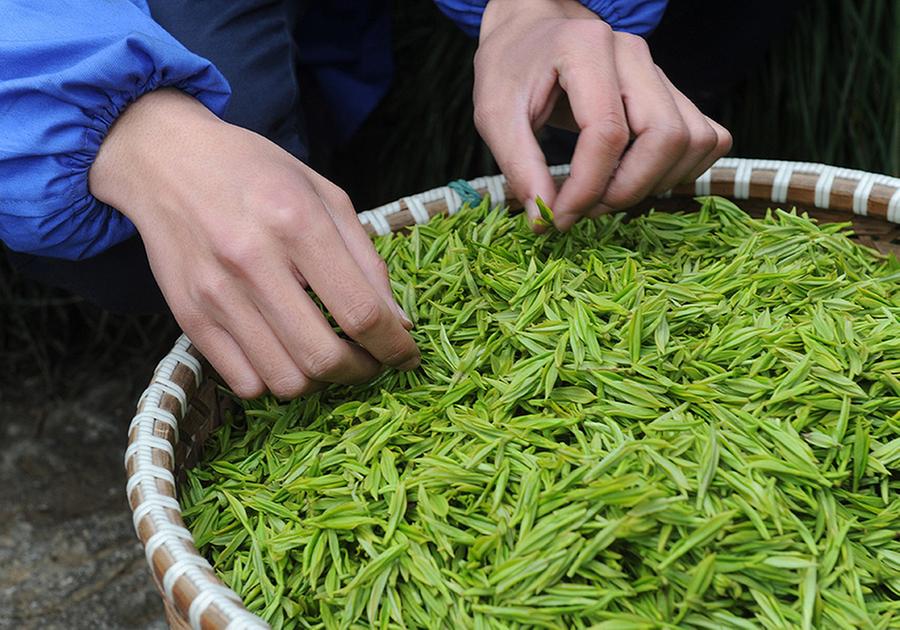
Longjing tea is renowned for its meticulous picking and processing methods. The finest quality Longjing is harvested around the Qingming Festival, emphasizing the freshness and tenderness of the leaves. Proper panning, a technique used to halt oxidation and lock in the tea's botanical essence, is critical to achieving the high quality associated with West Lake Longjing. In 2008, the traditional panning process was recognized as a national-level intangible cultural heritage, highlighting its cultural and historical importance.
Cultural Impact
The tea has deep roots in Chinese culture, not only as a beverage but also as a part of social customs and traditions. It symbolizes a connection to nature and embodies the elegance and sophistication of Chinese tea ceremonies. The preparation and consumption of Longjing tea involve a detailed appreciation of its fragrance, color and flavor, making it an integral part of China's rich cultural heritage.
Health Benefits
Longjing tea is reputed for its health benefits, which include refreshing the mind, quenching thirst, and reducing neutral fats and cholesterol in the blood. These attributes, combined with its delicate taste and aroma, contribute to its enduring popularity both in China and internationally.
Challenges and Preservation
The traditional methods of Longjing tea production face challenges due to modernization and the preference for more cost-effective machine processing. Hand-processing, while labor-intensive and physically demanding, remains essential for maintaining the tea's quality. Efforts to preserve these techniques are vital for sustaining the cultural heritage and economic viability of Longjing tea production. Article reference1. Come to China, enjoy six amazing teas. chinadaily.com.cn. 20242. Tea master steeps young apprentice in ancient tradition. chinadaily.com.cn. 20173. Living Heritage: Tea. chinadaily.com.cn. 2023Photo Gallery(5 pictures)CategoriesCultural HeritageTagIntangible Cultural HeritageFood CultureRelatedSix Major Categories of Chinese TeaGreen TeaWest Lake Longjing TeaCatalogue1. Overview2. Historical Significance3. Cultivation and Production4. Cultural Impact5. Health Benefits6. Challenges and Preservation- - - []








